
ERP Website Design: Key Features, Benefits, and Development Solutions for Businesses

In the modern business environment, managing multiple operations efficiently is essential for sustainable growth. Businesses often handle sales, inventory, finance, customer information, employee records, and reporting across different platforms. When these activities are disconnected, they can lead to delays, duplicated work, and difficulties in making informed decisions. ERP website design offers a way to bring essential business functions together through a centralized, web-based platform.
Enterprise Resource Planning (ERP) systems help organizations coordinate their daily activities, access business information, and improve operational visibility. A well-designed ERP website makes these functions easier to use by providing an organized interface, secure access, and workflows tailored to business requirements.
Whether you operate a startup, a manufacturing company, a retail business, or a growing enterprise, understanding ERP website design can help you identify opportunities to improve your business processes and digital infrastructure.
What Is ERP Website Design?
ERP website design is the process of planning and designing a web-based interface for an Enterprise Resource Planning system. It focuses on presenting business functions in a structured, accessible, and user-friendly format.
An ERP platform can connect departments such as accounting, inventory, procurement, sales, human resources, and customer management. Instead of relying on separate tools for every activity, employees can access relevant information through a centralized system, depending on their roles and permissions.
For example, a distribution company may use an ERP website to monitor product availability, process sales orders, manage suppliers, and generate reports. When these functions are properly integrated, employees can coordinate tasks more efficiently and reduce repetitive manual work.
ERP website design is not simply about creating an attractive interface. It also involves usability, data organization, workflow planning, responsive layouts, system integration, and security.
Why Do Businesses Need a Well-Designed ERP Website?
A thoughtfully designed ERP platform can help businesses manage growing operational requirements and improve how employees interact with business software.
1. Centralized Data Management
Businesses often store important information across spreadsheets, accounting applications, inventory tools, and separate databases. This can make it difficult to maintain consistent records.
An ERP system can bring supported business functions together and provide authorized employees with access to relevant information from a central platform.
Centralized information can improve coordination, simplify reporting, and help managers understand business activities more clearly.
2. Improved Workflow Efficiency
Manual processes can slow down routine operations. Employees may spend considerable time entering information, preparing reports, checking inventory, or requesting approvals.
ERP software can automate selected tasks, such as purchase approvals, order processing, stock updates, and invoice generation.
A well-organized interface makes these functions easier to navigate, helping employees complete tasks with fewer unnecessary steps.
3. Better Inventory Control
Inventory management is important for retailers, manufacturers, wholesalers, and distributors. Incorrect stock records can lead to purchasing mistakes, order delays, and customer dissatisfaction.
An ERP inventory management module can help businesses monitor stock levels, record product movement, manage purchase orders, and coordinate warehouse activities.
When inventory processes are integrated with sales and procurement, businesses can make better-informed purchasing decisions and improve stock visibility.
4. More Effective Business Reporting
Business owners and managers need reliable information to evaluate performance and plan future activities.
ERP dashboards can display selected information about sales, expenses, stock levels, orders, and other operational indicators. Reports can help decision-makers identify trends, monitor progress, and investigate potential issues.
The usefulness of these reports depends on accurate data, appropriate configuration, and clearly defined performance measures.
5. Improved Coordination Between Departments
An ERP system can connect workflows across different departments. For example, a sales order may trigger an inventory check, a purchasing requirement, delivery planning, and invoicing.
When these processes are connected, employees can work with more consistent information and reduce communication gaps between teams.
Essential Features of Modern ERP Website Design
The features required for an ERP website depend on the industry, organization size, business workflows, and technical requirements. However, several capabilities are important for many implementations.
User-Friendly Dashboard
An ERP dashboard should present relevant information in a clear and organized format. Users should be able to access frequently used functions without navigating through complicated menus.
Different departments may require different dashboards. For example, a finance manager may need financial reports, while a warehouse employee may need stock records and order information.
A role-based dashboard can make the system easier to use and reduce unnecessary distractions.
Responsive ERP Web Design
Employees may access an ERP system from desktop computers, laptops, tablets, or mobile devices. Responsive ERP web design helps the interface adapt to different screen sizes.
This is particularly useful for employees working across warehouses, retail outlets, manufacturing facilities, and multiple office locations.
Responsive design should also consider practical usability. Forms, tables, buttons, and navigation menus need to remain accessible on smaller screens.
Secure User Authentication and Permissions
ERP platforms may contain confidential business, employee, financial, and customer information. Access should therefore be controlled carefully.
Important security measures include secure authentication, role-based permissions, encrypted connections, regular software updates, and appropriate backup procedures.
Administrators should ensure that employees can access only the information and functions required for their responsibilities.
Reporting and Data Visualization
Reporting tools help businesses convert operational information into useful insights.
Depending on the ERP platform, reports may cover sales performance, stock movement, expenses, production activities, purchasing, and order status.
Charts, tables, filters, and export options can make reports easier to understand and use. Businesses should ensure that the information presented is accurate and relevant to their decisions.
Third-Party Software Integration
Many businesses already use accounting systems, customer relationship management software, payment gateways, shipping applications, or eCommerce platforms.
ERP integration allows compatible systems to exchange information through supported methods such as APIs or connectors.
Before implementation, businesses should identify which integrations are necessary, how frequently data should synchronize, and how errors will be handled.
Scalability and Performance
As a company grows, it may need to support more users, transactions, locations, and business processes.
ERP website design should consider expected workloads, database performance, system architecture, and future expansion. Planning for scalability early can help reduce the need for major changes later.
ERP Website Design vs. Traditional Website Design
Although both use web technologies, ERP websites and traditional business websites serve different purposes.
A traditional website generally provides information about a company, promotes services, attracts visitors, and generates enquiries. An ERP website or web application supports internal business operations through authenticated workflows and data management.
| Feature | Traditional Business Website | ERP Website |
|---|---|---|
| Primary purpose | Marketing and customer communication | Business operations and process management |
| Main users | Customers and website visitors | Employees, managers, and authorized users |
| Common features | Service pages, blogs, enquiry forms | Inventory, finance, orders, and reports |
| Access | Often publicly accessible | Usually protected by authentication |
| Integrations | Marketing and analytics tools | Business applications and operational databases |
Many organizations need both platforms. A business website attracts potential customers, while an ERP system helps manage the operational processes behind orders, inventory, billing, and reporting.
Step-by-Step ERP Website Development Process
Developing an ERP website requires careful planning, technical implementation, and testing. Following a structured process helps ensure that the final solution meets actual business needs.
Step 1: Identify Business Requirements
Start by understanding existing workflows, operational challenges, reporting requirements, and long-term business goals.
A manufacturing business may need production planning and raw material tracking, while a distributor may prioritize inventory control, supplier management, and order processing.
Clearly documented requirements help establish project priorities and avoid unnecessary functionality.
Step 2: Select the Required ERP Modules
Once the business requirements are understood, identify which modules are necessary.
Common ERP modules include:
- Finance and accounting
- Inventory and warehouse management
- Sales and order processing
- Procurement and supplier management
- Human resources and payroll
- Customer relationship management
- Production and manufacturing
- Business reporting and analytics
Not every organization needs every module. Selecting features according to operational requirements can help manage project complexity.
Step 3: Plan the Interface and User Experience
The design team should plan navigation, dashboards, forms, reports, and workflows for each user group.
A useful ERP interface should make common tasks straightforward, provide clear instructions, and display meaningful error messages when something goes wrong.
Prototypes and feedback from actual users can help identify usability problems before full development begins.
Step 4: Develop the System and Integrations
The development phase includes implementing the required features, configuring databases, creating application interfaces, and connecting compatible third-party systems.
Technical planning should cover data protection, performance, scalability, system maintenance, and data migration.
Existing records should be reviewed and cleaned before migration to reduce the risk of inconsistent or inaccurate information.
Step 5: Test Functionality and Security
Before launch, the ERP system should be tested for functional accuracy, access permissions, integration reliability, performance, and security.
Employees should also test common workflows to ensure that the system supports their daily responsibilities.
Resolving problems before deployment can reduce disruption and improve the overall user experience.
Step 6: Launch, Train, and Maintain
After testing and approval, the ERP website can be deployed according to the implementation plan.
Employee training, documentation, backups, performance monitoring, and regular maintenance help keep the system reliable as business requirements change.
How to Choose the Right ERP Website Design Company
Selecting an ERP development partner is an important decision because the system may support essential business activities for years.
Before choosing a provider, consider the following factors.
Relevant experience: Review previous projects and determine whether the provider understands your industry’s requirements.
Requirement analysis: A suitable provider should assess your workflows before recommending a solution.
Customization options: Confirm whether the system can support your processes, reports, and user roles without unnecessary complexity.
Integration capabilities: Discuss how the ERP platform will exchange information with your existing applications.
Security practices: Ask about authentication, permissions, backups, data protection, and ongoing maintenance.
Scalability: Consider whether the solution can accommodate future users, branches, and transaction volumes.
Technical support: Understand the arrangements for troubleshooting, updates, documentation, and future improvements.
A clearly defined project scope, realistic timeline, and transparent communication can help businesses make a more informed decision.
How Much Does ERP Website Development Cost?
ERP website development costs vary according to the features, integrations, customization, and technical complexity involved.
A basic system supporting a few business functions will have different requirements from a customized platform connecting multiple departments, locations, and external applications.
Factors that influence development costs include:
- Number and complexity of ERP modules
- Custom dashboard and workflow requirements
- Integration with third-party applications
- Data migration and cleanup
- Security and compliance requirements
- Employee training and deployment
- Hosting, maintenance, and technical support
Businesses should consider long-term ownership costs as well as initial development expenses. A requirements assessment can help establish a more realistic scope and budget.
ERP Website Design for Different Industries
ERP requirements differ according to the way an organization operates.
Manufacturing businesses: May need production planning, raw material tracking, procurement, and quality management.
Retail and eCommerce businesses: May require product management, inventory synchronization, order processing, and sales reporting.
Wholesale and distribution companies: Often benefit from warehouse management, purchase orders, stock transfers, and delivery coordination.
Professional service companies: May need project tracking, resource allocation, expense management, and invoicing.
Healthcare organizations: May use ERP systems for administrative functions such as procurement, finance, and workforce management. Clinical information requires appropriate specialized privacy and security controls.
The right ERP platform should reflect actual business requirements rather than forcing every organization into the same workflow.
Frequently Asked Questions
What is ERP website design?
ERP website design involves creating a browser-based interface for enterprise resource planning software. It focuses on usability, business workflows, secure access, reporting, and integration with business systems.
Can an ERP website be customized?
Yes. Depending on the platform and architecture, ERP functionality can be configured or customized to support specific workflows, dashboards, reports, integrations, and user permissions.
Is ERP website design suitable for small businesses?
ERP solutions can benefit small businesses that need to coordinate several operational functions. However, businesses should assess their requirements, implementation costs, and whether a simpler software solution would be sufficient.
How long does ERP website development take?
The timeline depends on the number of modules, custom functionality, integrations, data migration, testing, and deployment requirements. A detailed project assessment helps establish realistic milestones.
Does an ERP website need SEO?
Public-facing pages that describe ERP products or services can benefit from SEO because potential customers may discover them through Google. Private ERP applications should protect internal information and restrict unauthorized indexing.
What is the difference between ERP software and ERP web development?
ERP software provides the functionality used to manage business operations. ERP web development focuses on building or customizing the browser-based interface and related web components through which users access that functionality.
Conclusion
ERP website design can help businesses create a more connected working environment by bringing important operational processes together. From inventory management and finance to reporting, procurement, and order processing, a well-planned ERP platform can support better coordination and more efficient workflows.
Choosing the right features, prioritizing security, improving usability, and planning for future growth are important steps toward a successful implementation. Businesses should evaluate their operational needs carefully and select solutions that provide practical value over the long term.
For businesses looking to strengthen their digital presence alongside their technology initiatives, Digicommit, a digital marketing agency in Noida, offers digital marketing services designed to help businesses improve their online visibility. Through SEO, content marketing, website development, and other digital marketing solutions, Digicommit can help businesses build a stronger online presence and connect with their target audiences. Visit Digicommit to learn more about its services and discuss your digital marketing requirements.
Related Post
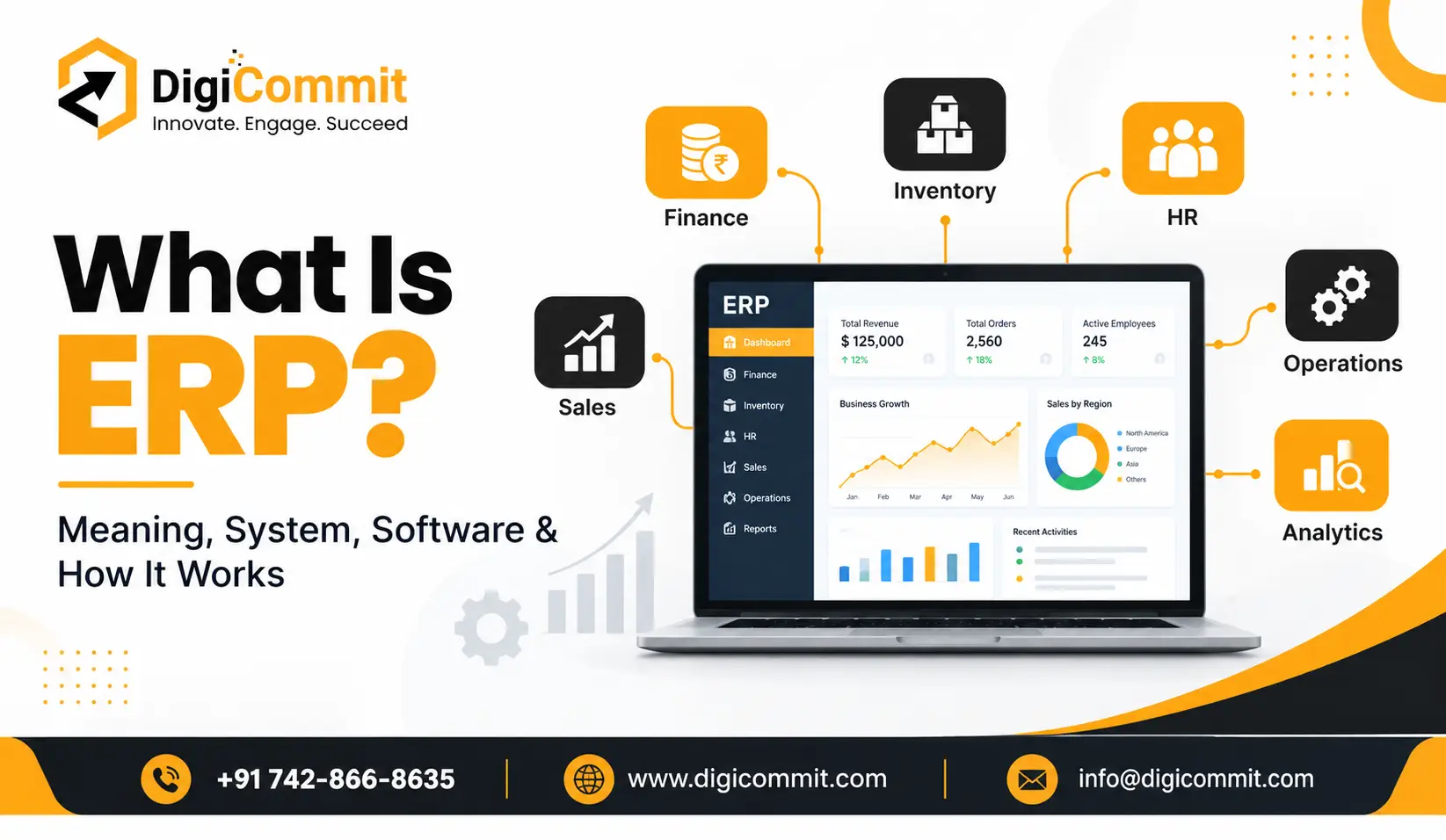
What Is ERP? A Complete Guide to ERP Systems, Software,…
What is ERP? It is a common question among businesses looking to…